.png?width=180&height=38&name=POW-rgb-horizontal-aqua%20(1).png "POW-rgb-horizontal-aqua (1)")
 ·
5 minute read
·
5 minute read
Whether 2025 brought success or less-than-ideal times to your company, a new year—and new chances to make your mark in the business world—looms quite near. Before the band strikes up Auld Lang Syne and the champagne bottles get popped, though, you and your employees still have a few days left to position the company for its best year yet.
December is a wonderful time to make a list and check it twice. What you asked Santa for is your business, but we felt compelled to stuff your stockings with one final marketing checklist to complete before the new year. Let’s see what’s under the tree!
MarTech Checklist for 2026 and Beyond
Starting strong in January requires solid preparation. We don’t want to keep you from your holiday festivities too long, so we’ll go through this checklist as quickly as we can.
 LISTINGS MANAGEMENT
The first item on PowerChord’s 2026 martech checklist involves–you guessed it–lists! Your company needs to be on the nice list to ensure B2B buyers can find you and trust you. Google Business Profile (formerly Google My Business) is the first place your business needs to go, but there’s so much more - Yelp, Foursquare, and Apple Maps, to name three.
Each listing must also match the others; otherwise, Google’s indexing trawlers get confused and list your business farther down SERPs. Make sure Google searchers turn into leads in 2026 by prioritizing online business listings and directories. If your company has a bunch of locations, it might be time to invest in some purpose-built marketing software (hint, hint).
- ONE LOGIN FOR ALL TOOLS
The surest way to turn marketing professionals into a Grinch is to make them sign in to five different accounts just to monitor their latest campaigns. If your business has one tool for reporting, one tool for paid media, one tool for email marketing, one tool for listings management, and on and on, know that unified platforms exist to make your life easier.
- ONLINE REPUTATION MANAGEMENT
The latest data is out, and it’s clear—buyers check reviews before making a purchase. In 2025, a staggering 98 percent of survey respondents reported reading at least one review prior to purchasing a product or service.
Multi-location businesses with dealerships, franchises, and distributors have enough on their hands without having to respond to dozens of reviews from across the world. With review management no longer a nice-to-have service, unwrap the gift of efficiency this holiday season with marketing software that makes the task as efficient as possible. Remember—negative reviews provide opportunities for your business to showcase your stellar professionalism and customer service.
- AUTOMATED EMAILS AND FOLLOWUPS
Speaking of efficiency, let’s talk about automation! We’re not saying you don’t love your job, but you probably have a few tasks that don’t take much brainpower but are nevertheless repetitive and time-consuming. For many B2B marketers, these rote tasks involve email follow-ups to MQLs after the leads take a desired action.
You might not realize how much time these routine, scheduled emails take up until you find a platform that automates them. Let your marketing tools take care of the scheduled sends so you have more time for communications that require a more personalized touch.
- MULTI-TOUCH ATTRIBUTION
How can your business know which part of the B2B buyer journey resulted in the deal getting done? Sure, you can ask your clients which touchpoint they found most impactful, but there’s often a difference between stated and revealed preferences. You could also attribute the last (or first) contact before purchase as the most important one, but that doesn’t exactly cut it in today’s fractured media environment.
To really get into the minds of your customers, multi-touch attribution is the way to go. Multi-touch attribution models assign varying scores to different types of touchpoints to reveal which one was most significant in the buyer’s decision. For instance, your software’s full part multi-attribution model might place greater emphasis on the first touchpoint, formal lead creation (such as a resource download), and one-on-one client conversations. Once you figure out which touchpoints are most impactful, your marketing team can double down. It is, we daresay, the gift that keeps on giving.
- CENTRALIZED DATA
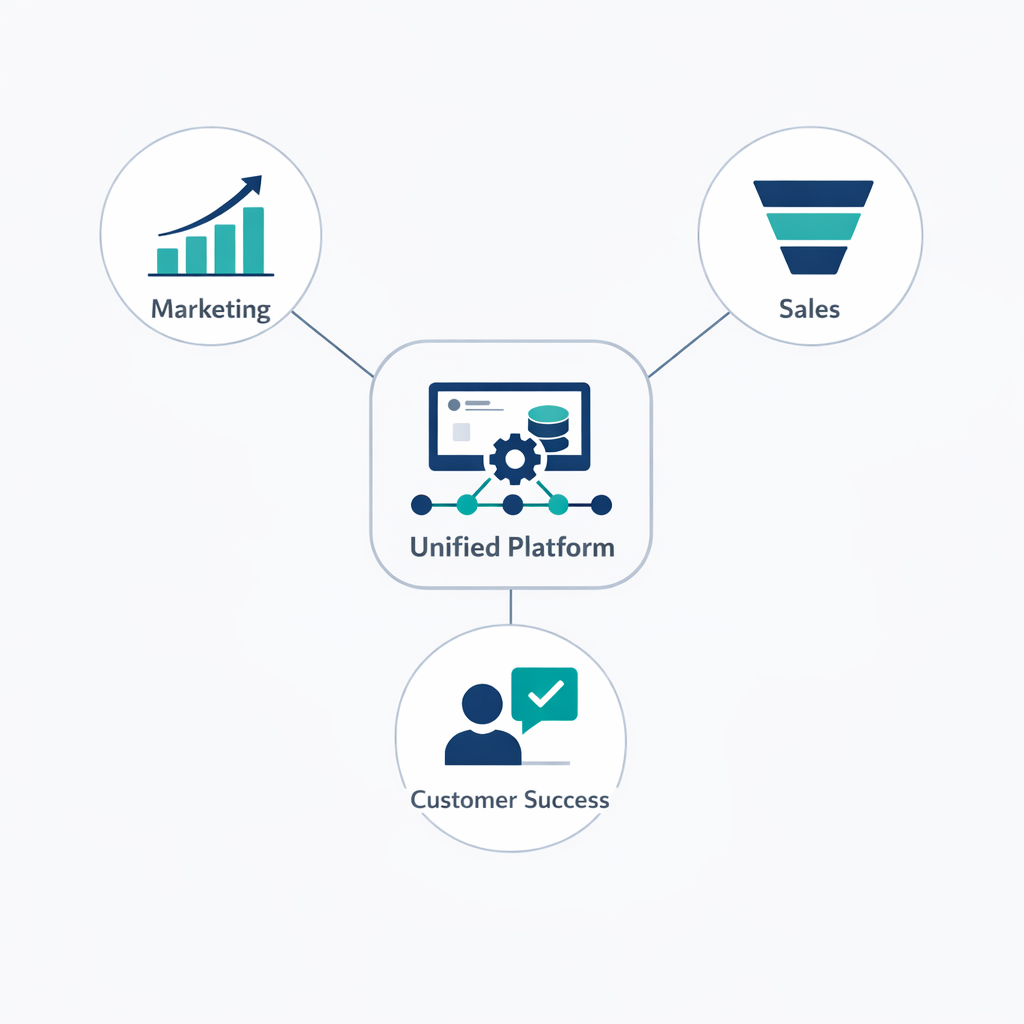
We already mentioned the value of single-login marketing tools, but having centralized data benefits more than just your marketing team. PowerChord is a big proponent of the RevOps (revenue operations) model that brings together marketing, sales, and customer service departments. Each one plays a vital role in lead generation and client satisfaction.
Wouldn’t it make sense to have all three RevOps departments operating from the same dataset? We think so, too. The single source of truth is an underrated part of successful businesses, and that’s the perfect gift to stash under the tree this December.
PowerStack is the Unifier, the Simplifier
If the thought of more marketing data sounds daunting, it’s time for a better marketing platform. Treat yourself this holiday season to a centralized martech tool that automates tasks and provides insights to drive revenue.
PowerChord’s unifying marketing software, PowerStack, is designed for B2B companies with multiple locations. We’ll help you stay on top of the important marketing tasks without losing your mind—how’s that for a Christmas miracle?
Frequently Asked Questions (FAQs):
What is a marketing technology stack?
A marketing technology stack, also known as a martech stack, is the set of technologies and tools marketers use to complete their tasks. Each marketing department has a slightly different stack depending on its industry, capabilities, size, and sales-cycle characteristics.
What are the key components of a martech stack?
The key components of a martech stack depend on many variables, including the department’s size and responsibilities, along with the characteristics of typical clients. Most companies have digital tools that assist with local SEO, lead scoring, analytics, email and social media marketing, and general client relationship management. Many platforms offer multiple capabilities within a single system.
How to create a martech stack?
To create a martech stack, your marketing department must first decide what it wants the software to achieve. Once you have goals in mind, find highly rated software vendors that offer solutions. It might help to prioritize digital tools with centralized data and multiple capabilities, so your team doesn’t have to juggle multiple logins.
What exactly is B2B marketing?
B2B marketing, or business-to-business marketing, refers to outreach between one company that primarily sells products and services to other companies (the marketer) and another company that may sell to companies or consumers. This type of marketing involves long selling cycles, trusted relationships, and an emphasis on ROI.
What are the benefits of using a unified marketing platform for multi-location businesses?
A unified marketing platform simplifies management by providing a single login and centralized data, which improves efficiency, reduces errors, and enhances collaboration across marketing, sales, and customer service teams, especially for businesses with multiple locations.
How does multi-touch attribution improve B2B marketing strategies?
Multi-touch attribution assigns value to various customer touchpoints throughout the buyer journey, helping marketers understand which interactions are most influential in closing deals, allowing for better allocation of marketing resources and improved ROI.
What challenges do companies face when managing online business listings?
Companies often struggle with inconsistent information across multiple listings, which can confuse search engines and customers, leading to lower search rankings and missed leads. Managing reviews and maintaining accurate data across platforms like Google Business Profile, Yelp, and Apple Maps is also challenging without dedicated tools.
Why is online reputation management critical for B2B companies?
Online reputation management is crucial because buyers frequently read reviews before making purchasing decisions. Responding professionally to reviews, including negative ones, can build trust, demonstrate customer service excellence, and influence buying behavior positively.
How can marketing automation save time for B2B marketers?
Marketing automation handles repetitive tasks like scheduled email follow-ups and lead nurturing, freeing marketers to focus on personalized communication and strategic initiatives, thereby increasing productivity and campaign effectiveness.
%20(2)-2.png)