.svg "PowerChord-Logo")

For more than twenty years, PowerChord has worked alongside multi-location brands and dealer networks of every size. The same pattern shows up over and over: strong national campaigns, significant budget, and leads that quietly disappear before they ever reach a local storefront. The tools have evolved. The gap between national and local hasn't. This is how you close it.
What Is Multi-Location Lead Generation and Why Is It So Hard to Get Right?
Multi-location lead generation is the process of attracting, capturing, routing, and converting potential customers across multiple physical or independently operated business locations, whether those are company-owned stores, franchise units, or independent dealers representing your brand.
It sounds straightforward. It rarely is.
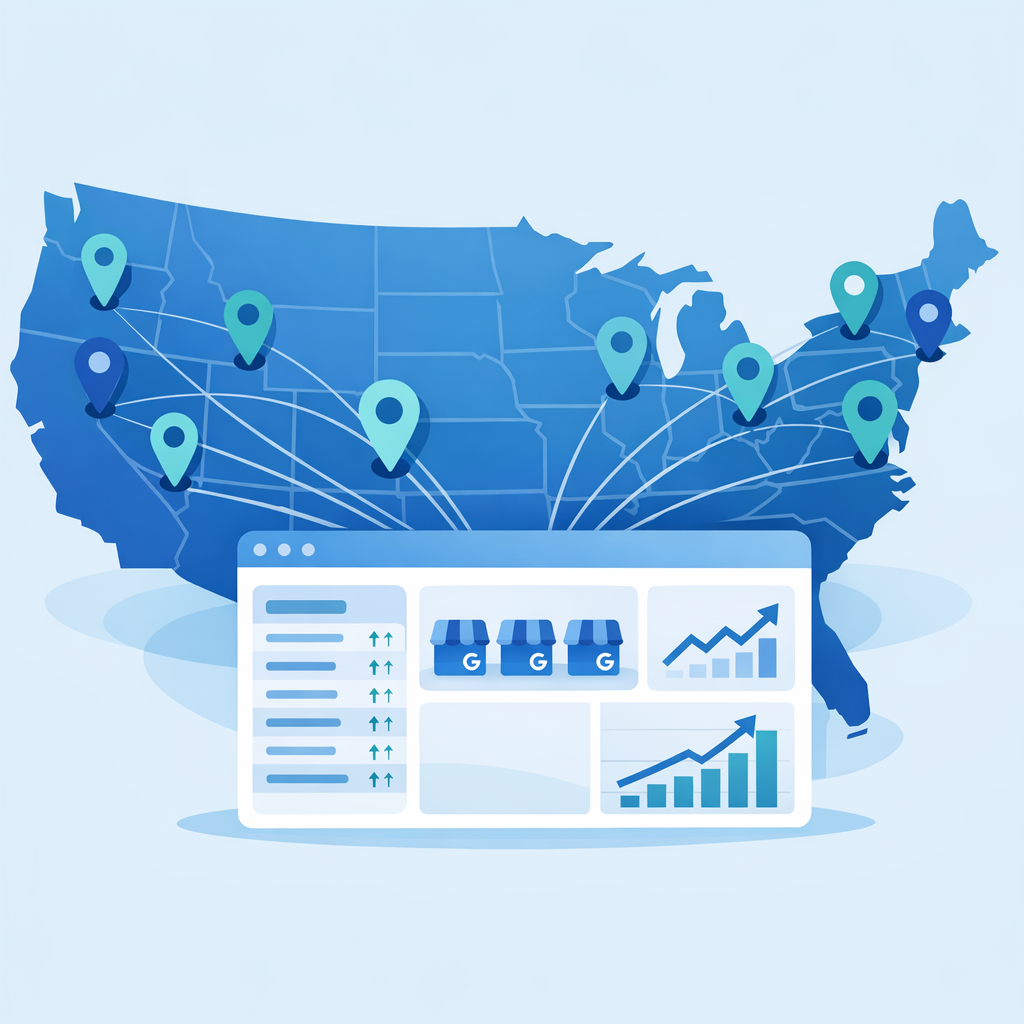
The reason multi-location lead generation is fundamentally different from single-location marketing comes down to one central tension: your brand lives nationally, but your customer buys locally. A person searching for a zero-turn mower, a home equity loan, or a dental implant isn't thinking about your corporate headquarters. They're thinking about what's available near them, today, from someone they can trust.
When your marketing infrastructure isn't built to bridge that gap, when a national ad drives a click that lands on a page with no local context, a store locator that doesn't work on mobile, or a lead form that routes to a corporate inbox nobody monitors, you lose that buyer. Often permanently.
PowerChord has seen this happen at companies with 12 locations. We've seen it happen at networks with 1,200 dealers. The scale changes. The failure mode doesn't.
Who This Guide Is For
This playbook is written for brand marketing leaders (CMOs, VPs of Marketing, Marketing Directors) at companies that operate through multiple locations, franchise systems, or independent dealer networks. It's also written for marketing managers responsible for local or regional performance, dealer network managers and OEM marketing teams who sell through independent dealers, and multi-location business owners ranging from regional franchise operators to multi-unit retail or service brands.
If your national campaigns generate traffic but local conversion rates are inconsistent across locations, this guide is for you. If individual locations or dealers complain they aren't getting enough leads but you can't tell who's dropping the ball versus who's genuinely underserved, keep reading. If your brand experience feels cohesive on the corporate website but falls apart the moment a customer tries to find a local provider, or if you're running paid ads nationally with no visibility into which locations those dollars are actually helping, this playbook was built for your situation.
The Evolution of Multi-Location Marketing: What's Changed in 20 Years
When PowerChord started working in this space in the early 2000s, the multi-location marketing challenge was almost entirely offline. Yellow Pages. Direct mail by zip code. Local newspaper inserts. The corporate office created the materials; the local franchisee or dealer printed them. "Digital" meant having a website, singular.
Then came the decade of chaos: every location started doing its own thing online. Individual Facebook pages. Independently purchased Google Ads campaigns. No brand standards, no shared data, no coordination. We watched brands spend enormous sums on national awareness only to have individual locations actively undercut the messaging with inconsistent, low-quality digital presences.
Today, we're in a third era, one that requires a more sophisticated architecture. Multi-location brands now have to manage local search visibility across Google Business Profile, Apple Maps, Bing Places, and emerging AI-driven search results. They have to coordinate paid media that can be targeted hyper-locally while still being managed centrally. They have to support dealer or franchisee websites that carry the brand forward while remaining locally relevant. And they have to do all of this while maintaining the data and attribution visibility that gives the corporate team insight without stripping local operators of accountability.
The brands winning at multi-location lead generation aren't doing more. They're doing it smarter, with centralized infrastructure and localized execution. Here's exactly how.
7 High-Impact Strategies for Multi-Location Lead Generation
1. Build a Localized Landing Page Architecture (Not Just a Store Locator)
This is the single most impactful structural change most multi-location brands can make, and the most consistently overlooked.
A store locator tells a customer where you are. A localized landing page tells them why they should choose the location near them. These are fundamentally different things.
Every location in your network, every dealer, every franchise unit, every branch, should have its own indexed, search-optimized landing page. That page should include the location's name, address, and phone number in consistent structured format, along with location-specific hours, services, and inventory where applicable. A personal message from the location owner or manager, dynamically pulled local reviews, and a primary call-to-action that routes directly to that location (not a corporate inbox) round out the essentials.
From an SEO standpoint, these pages are how your brand captures searches like "[product/service] dealer near [city]" or "[brand name] [city]," queries with high commercial intent that a single national website cannot compete for on its own. For equipment dealers selling zero-turn mowers, compact tractors, or outdoor power equipment, this is the difference between a buyer finding your nearest authorized dealer or finding a big-box competitor who showed up in the local pack instead.
If you sell through independent dealers who have their own websites, your job is to ensure those dealers have the tools, templates, and guidance to build strong local pages, and that there is a clean digital pathway from your brand's website to theirs. Co-op digital programs that subsidize or build local landing pages for dealers are among the highest-ROI investments we have seen in this space. PowerChord's microsites and lead management platform is built specifically to support this kind of localized infrastructure at scale.
2. Architect Your Lead Routing Before You Scale Your Lead Generation
Here's a mistake we see constantly, even at sophisticated marketing organizations: they invest heavily in generating leads without first solving where those leads go.
Multi-location lead routing is the process of ensuring that a lead captured anywhere in your digital ecosystem, whether through a national ad, a local landing page, an organic search click, or a chatbot interaction, ends up in the hands of the right location quickly and reliably.
Poor lead routing is one of the primary causes of lead leakage in multi-location networks. A lead that comes in through a national contact form and sits in a shared inbox for 48 hours is not a lead anymore. It's a lost opportunity.
Effective routing starts with geographic assignment, automatically delivering inbound leads to the nearest location based on the prospect's location data. It requires lead notification SLAs with enforced response time expectations across all locations. Industry research consistently shows that conversion rates drop dramatically after the first hour. It also requires fallback routing so that if a location fails to respond within a defined window, the lead automatically escalates to a regional manager or centralized response team. And it requires CRM integration at the location level so leads flow into a system location managers actually use, not just into email.
For dealer networks specifically, this is where many OEM brands struggle most. You are routing leads to independent businesses you do not control. The problem is most acute in verticals with strong seasonal demand and multi-brand dealer relationships. A powersports dealer carrying lines from three different OEMs simultaneously is managing three separate lead flows, three co-op programs, and a selling season that compresses inquiry volume into a matter of weeks. A marine dealer faces the same dynamic every spring. When lead routing breaks down in those windows, the lost revenue is permanent. The solution is a combination of technology with dealer-facing dashboards that make routing automatic, accountability through co-op program requirements tied to lead response metrics, and support that makes it easy for dealers to respond quickly through templates, training, and follow-up automation.
3. Run a Coordinated Paid Media Strategy: National Funding, Local Targeting
National brand awareness campaigns and local lead generation campaigns are not the same thing and should not be managed the same way.
A national campaign builds familiarity. A local campaign drives someone to act. Multi-location brands that treat these as a single line item, or that cede all local paid media to individual locations without coordination, consistently underperform.
The model that works is centralized strategy with localized execution. Corporate or agency sets the campaign architecture, creative standards, audience targeting parameters, and budget allocation framework. Individual locations (or the brand on behalf of locations) execute geo-targeted campaigns within that framework. The result is brand consistency across all paid media regardless of which location is being promoted, economies of scale in creative production and campaign management, local relevance through geo-targeting and location-specific ad extensions, and consolidated reporting so leadership can see which markets are performing and where to shift investment.
For Google Ads specifically, location assets and local service ads are underutilized by most multi-location brands. Ensuring every location is properly tied to your Google Ads account and showing accurate location information in search results is a baseline requirement that many brands still haven't fully addressed.
4. Treat Local SEO as Infrastructure, Not a Campaign
For most multi-location businesses, local SEO is not a marketing tactic. It is foundational infrastructure. It is the digital equivalent of having a physical sign on your building. Without it, people who are actively looking for what you offer, near where you operate, will not find you.
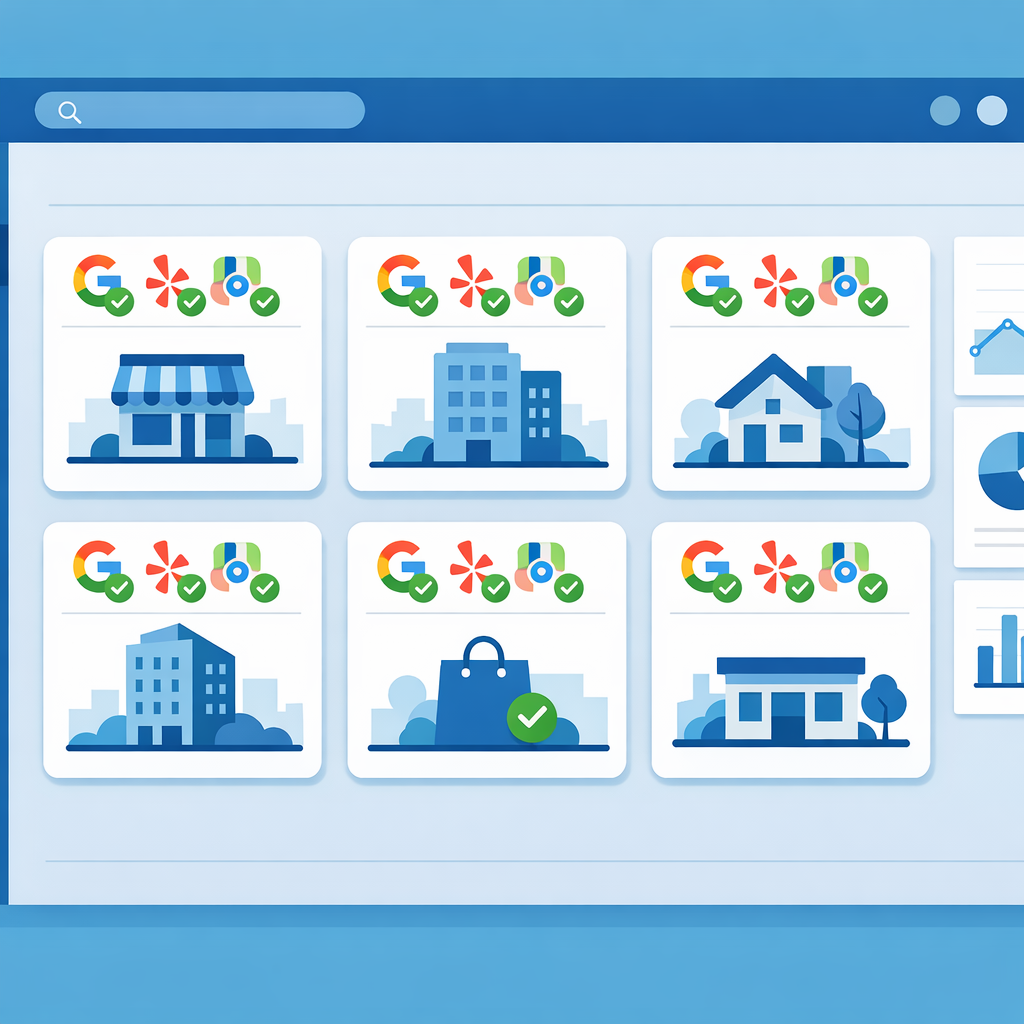
Local SEO for multi-location businesses starts with Google Business Profile management at scale. For a deeper look at how to approach this across your entire network, see our guide to SEO for multi-location businesses. Every location needs a fully completed, actively managed GBP listing with accurate NAP data, current hours including holiday hours, current photos, active review responses, and regular posts. At scale this requires either a platform that manages GBP across all locations or a very disciplined internal process.
Each location landing page also needs to be optimized for local keywords, including the city or region name combined with relevant product and service terms. Think "powersports dealer [city]" or "Kubota dealer [county]," not just generic category terms. Citation consistency matters too: your location data must be uniform across all major directories and data aggregators, because inconsistent citations confuse search engines and erode local ranking authority.
Review velocity and response rounds out the picture. Brands that systematically ask for reviews after positive customer interactions, and respond thoughtfully to all of them, consistently outrank competitors who treat reviews as an afterthought.
One more factor worth flagging: with the rise of AI-powered search overviews, including Google's AI Overviews and ChatGPT search, structured and well-organized location data is increasingly being used to populate AI responses to local queries. Brands with clean, consistent, well-described location data are significantly more likely to appear in these AI-generated answers.
5. Deploy Intelligent Lead Capture Beyond the Basic Contact Form
The standard "Name, Email, Phone, Message" contact form was state of the art in 2008. Today it's the lowest-converting tool in your lead capture arsenal, and in many cases it's actively deterring leads rather than capturing them.
Modern lead capture starts with conversational AI chatbots that carry local context. A well-configured chatbot can engage a website visitor at 11 PM on a Saturday, qualify their interest, connect them to relevant inventory or service information, and capture their contact information, all without any human involvement. Critically, the chatbot should be able to identify the visitor's location and route the conversation accordingly.
Progressive lead capture is another significant upgrade over the traditional form. Rather than asking for all information upfront, progressive capture collects minimal information initially (often just an email or phone number) and gathers additional qualifying details through subsequent touchpoints. This approach dramatically increases top-of-funnel capture rates.
For many multi-location businesses, particularly in home services, automotive, and medical, phone calls remain the highest-converting lead type. Every location page should have a prominently displayed, mobile-optimized click-to-call button with a tracked number tied to it. And for dealers and retailers, CTAs like "Check Availability Near You" or "Find This Product at a Dealer" consistently outperform generic contact forms because they meet the buyer where they actually are in their journey.
6. Implement Call Tracking and Attribution Across Your Entire Location Network
You cannot manage what you cannot measure. In multi-location marketing, this is especially true of phone-based leads, which remain a dominant conversion channel in industries like home services, healthcare, automotive, and financial services.
Call tracking assigns unique phone numbers to specific marketing channels, campaigns, geographic regions, or even individual ads. Here's why call tracking matters and how it translates directly into smarter marketing decisions across your location network.
For multi-location brands, this delivers attribution clarity so you can finally answer which campaigns are actually driving phone leads to which locations. It enables location-level performance benchmarking by comparing call volume, answer rates, and call duration across locations to identify both high performers to learn from and underperformers to support. It allows you to shift marketing budget toward channels and markets that are generating calls and away from those that aren't. And call recordings, with appropriate compliance disclosures, allow you to assess lead quality and identify training opportunities for location-level staff.
One important note: call recording and tracking must be implemented in compliance with applicable state and federal laws. Requirements vary significantly by state, particularly regarding consent disclosures. Ensure your implementation is reviewed by legal counsel familiar with telecommunications regulations in your operating markets.
7. Build a Systematic Online Reputation Management Program
For multi-location businesses, online reputation is not a single asset. It is a portfolio of dozens, hundreds, or potentially thousands of individual location profiles across multiple review platforms. Managing that portfolio reactively, waiting for bad reviews and then responding, is not a strategy. It's crisis management.
A proactive program starts with systematic review generation. Train location-level staff on the most effective ways to request reviews from satisfied customers. The best time to ask is immediately after a positive interaction while the experience is still fresh. Automated post-visit email or SMS sequences can scale this process significantly across a large network.
Centralized monitoring with local response is the operational backbone. A platform that aggregates reviews across all locations and platforms into a single dashboard lets you flag reviews that require escalation, empower location managers to respond to routine reviews within brand guidelines, and maintain a consistent standard of engagement without losing local authenticity.
Every response to a negative review, especially a public one, is a piece of marketing content. A thoughtful, professional response to a negative review often reassures prospective customers more effectively than the positive reviews do, because it demonstrates accountability. Develop response templates and guidelines that location managers can adapt without sacrificing authenticity.
Finally, surface positive location-specific reviews on location landing pages and in paid ad extensions. Social proof at the local level is a meaningful conversion factor, particularly in high-consideration purchase categories.
The Centralized vs. Localized Marketing Decision Framework
One of the most consequential decisions a multi-location brand makes is how much marketing control to retain centrally versus how much to push to individual locations or dealers. There is no universal right answer, but here is the framework PowerChord has used with clients for years.
Centralization makes sense when consistency of brand presentation is a competitive differentiator, when individual locations lack the resources or bandwidth to execute well independently, when the activity requires scale to be cost-effective, or when you need consolidated data and attribution across the network.
Localization makes sense when local market knowledge is a genuine competitive advantage, when speed of response to local conditions matters more than perfect brand consistency, when individual location operators have strong marketing capability and want autonomy, or when local relevance is a meaningful factor in purchase decisions for your category.
The best architectures are hybrid: centrally built platforms and frameworks that give local operators a defined lane to customize within. Think of it as brand guardrails, not brand handcuffs.
Common Multi-Location Lead Generation Mistakes to Avoid
After more than 20 years working with multi-location brands and dealer networks, these are the failure patterns PowerChord sees most often.
Treating all locations equally in budget allocation is one of the most common. High-opportunity markets deserve more investment, and that decision should be driven by data, not intuition or internal politics.
Launching campaigns before fixing the conversion path is another. Driving traffic to a broken or incomplete location experience is burning money. Audit your location pages, routing, and CRM integration before scaling spend.
Ignoring dealer or franchisee adoption undermines even the best technology investments. The best lead generation platform delivers zero ROI if local operators don't use it. Training, support, and clear value demonstration are not optional.
Optimizing for leads instead of revenue is a subtler but costly mistake. A location generating 50 leads that converts 2 is underperforming a location generating 20 leads that converts 10. Track pipeline and revenue by location, not just lead volume.
Finally, setting and forgetting local listings is a persistent problem at scale. Business information changes: hours, addresses, phone numbers, staff. Outdated listing data is a direct cause of lost leads and erodes local search authority over time.
Frequently Asked Questions
What is the most common reason multi-location businesses lose leads?
The most common cause of lead leakage in multi-location networks is poor lead routing: leads that are captured nationally but not reliably or quickly delivered to the local location best positioned to convert them. A close second is a fragmented digital experience where a nationally driven prospect reaches a local landing page that is incomplete, inconsistent with the national brand, or lacks a clear next-step CTA.
How should a brand manage lead generation for independent dealers who aren't employees?
The most effective approach combines technology with incentive alignment. Provide dealers with a lead management platform that's easy to use and gives them visibility into their own pipeline. Tie co-op marketing program participation to lead response metrics. Offer training and support resources. Make it easier for dealers to perform well than to ignore the system.
How do multi-location businesses show up in Google's AI Overviews?
AI Overviews favor content that is clearly structured, directly answers specific questions, and is supported by authoritative and consistent information. For local queries, brands with complete and consistent Google Business Profile data, strong review profiles, and well-organized location-specific web pages are more likely to surface in AI-generated search responses. Structured FAQ content, clear definition sections, and specific data points also increase the likelihood of AI Overview inclusion.
What is the right balance between national brand campaigns and local lead generation spend?
This ratio varies significantly by industry, business model, and maturity of local markets. A common starting framework is 60 to 70 percent of digital spend allocated to local and conversion-focused activity and 30 to 40 percent to national brand awareness, but this should be adjusted based on your actual attribution data, not industry averages. Brands in early-stage market development may need to weight national awareness more heavily; mature networks typically benefit from shifting investment toward local conversion activity.
How do I benchmark lead generation performance across locations?
Start by establishing location-level baselines across four metrics: lead volume per month, lead response time, lead-to-opportunity conversion rate, and cost per acquired customer. Compare these metrics across locations of similar size, market type, and tenure. Consistent underperformance across all four metrics typically indicates a local execution issue. Consistent underperformance in lead volume only typically indicates a marketing investment or visibility issue.
What technology do I actually need to run multi-location lead generation effectively?
At minimum you need five things: a CRM or lead management platform that routes each lead to the right location while still giving the brand visibility into all of them, local SEO and Google Business Profile management for every location, listings management to keep location data accurate everywhere customers search, call tracking to attribute phone leads, and reputation management to handle reviews at the location level.
For brands running dealer or franchise networks, buying those separately means five vendors, five logins, and no single view of which locations convert. A purpose-built distributed marketing platform is usually the better answer. PowerChord built PowerStack that way, running listings, reputation, call tracking, microsites and lead management, CRM, and reporting across every location from one platform, with every lead routing back to the brand.
What technology do OEM brands use to manage lead generation across dealer networks?
OEM brands managing lead generation across dealer networks need a centralized platform that operates at two levels simultaneously: brand-level visibility across the entire network and location-level execution for each individual dealer. The most effective OEM marketing platforms give the brand a single dashboard showing lead volume, campaign performance, and listings accuracy across every dealer, while giving each dealer a locally optimized presence, automated lead routing, and tools to respond to inquiries quickly. Co-op advertising funds are managed and tracked inside the same platform so every dollar spent at the dealer level is connected back to the OEM's investment. PowerChord's PowerStack platform is built specifically for this model.
Why is lead management harder to standardize across multiple service locations?
Lead management becomes harder to standardize at scale because the variables that determine whether a lead converts multiply with every location you add. Each location has different staff, different response habits, different technology adoption levels, and different competitive dynamics in its local market. A process that works smoothly at your best-performing location may break down entirely at one where the manager is in the field all day and nobody is monitoring the inbox. Independent dealer and franchise networks add another layer of complexity because you are asking businesses you do not own or control to follow systems they did not design and may not be incentivized to prioritize. Geographic assignment logic, lead notification rules, fallback escalation paths, and CRM integration all have to work consistently across every location for standardization to hold. When any one of those components is missing or inconsistently applied, the entire routing architecture degrades and leads fall through the gaps at whatever point the process breaks down.
How do multi-location brands measure success at both national and local levels?
The mistake most multi-location brands make is measuring success at only one level. National metrics like brand awareness, total lead volume, and aggregate cost per lead look healthy on a dashboard while individual locations bleed opportunities nobody is monitoring. Local metrics reviewed location by location without a consolidated view make it impossible to spot network-wide patterns or allocate budget intelligently.
The right measurement architecture runs at both levels simultaneously. At the brand level, track total lead volume across the network, cost per lead by channel, conversion rate from lead to closed sale, and which markets are generating the most qualified inquiries relative to investment. At the location level, track lead response time, lead-to-opportunity conversion rate, cost per acquired customer, and review volume and rating trends over time. The brand-level view tells you where to shift investment across the network. The location-level view tells you where execution is breaking down and which locations need support, training, or different tools. When both views live in the same platform and update in real time, the decisions that follow are based on actual performance rather than monthly reporting calls and manually compiled spreadsheets.
The Bottom Line
Multi-location lead generation has never been more complex, or more winnable, than it is today. The brands pulling away from competitors in dealer networks, franchise systems, and multi-unit operations are the ones that have stopped treating local lead generation as an afterthought to national brand strategy and started treating it as a precision system: centrally engineered, locally deployed, and continuously optimized with real data.
The seven strategies in this guide are not a checklist to knock out in a quarter. They are an architecture to build over time, prioritized based on where your network is losing the most leads today.
Start with your conversion path. Fix the routing. Invest in location-level visibility. Then scale.
PowerChord has spent more than 20 years helping multi-location brands and dealer networks build exactly this kind of infrastructure. If you are ready to stop losing leads between national and local, schedule a demo and we will show you where your network stands today and what it would take to close the gap.