.svg "PowerChord-Logo")

Running paid media campaigns across multiple locations presents a specific set of challenges that national brand campaigns and single-location local campaigns do not face simultaneously. The message that converts in Phoenix may underperform in Minneapolis. The platform that drives calls for a roofing company in Florida may not be where equipment buyers in the Midwest spend their time. And when you are managing ten, fifty, or five hundred locations, the operational complexity of keeping every campaign locally relevant while maintaining brand consistency across the network is a real problem that generic advertising advice does not solve.
The businesses that run multi-location digital advertising well have done one thing consistently: they have built the infrastructure to manage campaigns at scale without sacrificing local relevance.
Understanding Multi-Location Digital Advertising
Multi-location digital advertising is the practice of running paid media campaigns across different geographic markets for a brand operating in multiple locations. The goal is not to run one national campaign and hope it resonates everywhere. It is to run campaigns that feel local to each market while supporting the overall brand and generating measurable results at the location level.
That distinction matters because the buyer behavior in each market is genuinely different. A homeowner searching for roof replacement in a market that just had a hailstorm is responding to urgency. A powersports buyer researching a side-by-side UTV in a rural market is in a long consideration cycle and comparing specific models. An equipment dealer buyer in a commercial landscaping business is evaluating service capability and parts availability as much as price. One campaign structure does not serve all of these buyers equally.
Multi-Location Digital Advertising vs. Marketing
Advertising and marketing are related but not the same, and understanding the distinction matters when you are allocating budget and evaluating performance across a network of locations.
Marketing covers the full picture: local SEO, content strategy, reputation management, listings accuracy, and brand presence across every touchpoint a buyer might encounter before they ever click an ad. Digital advertising is specifically about paid media placements designed to generate immediate action, whether that is a phone call, a form submission, or an in-person visit tied to a specific location.
In a multi-location context, the marketing layer keeps every location visible and credible in organic search. The advertising layer accelerates lead generation in specific markets when demand is high or a seasonal window is open. The two work best when they are running in the same platform, sharing the same data, and informing each other's performance. When paid media data and organic performance data live in separate systems, you are making budget decisions with incomplete information.
5 Essential Best Practices for Multi-Location Digital Advertising
1. Build campaigns around local markets, not network averages
The most common mistake in multi-location advertising is treating every location the same. A campaign structure that performs at the network average may be significantly underperforming in your highest-value markets and overspending in markets that do not convert as well. Building campaigns at the location or market level from the start, with budgets and targeting parameters specific to each area, gives you the data to make better allocation decisions over time.
For brands managing dealer networks or franchise systems, this means every authorized location needs its own campaign destination, its own locally relevant messaging, and its own performance tracking. Sending every ad click to a national brand website tells you nothing about which markets are converting and which are not.
2. Match the channel to the buyer in each market
Paid search captures buyers who are already actively looking for what you offer. Social media advertising reaches buyers who are not yet searching but are a relevant audience for your product or service. Connected TV and streaming video advertising builds awareness in markets where you need to establish presence before buyers start searching. Display and retargeting keeps your brand visible to buyers who have already shown interest but have not yet converted.
The right channel mix depends on the buyer behavior in each specific market. Equipment dealers, outdoor power equipment dealers, powersports dealers, and marine dealers in markets with strong seasonal buying cycles benefit from paid search campaigns that launch before the season opens and social advertising that builds awareness during the research phase. HVAC companies and home services companies in markets with frequent severe weather need search campaigns ready to activate immediately and social campaigns that can reach homeowners in specific zip codes within hours of a storm event.
3. Use call tracking to connect every ad to every call
For most multi-location businesses, phone calls are the highest-value conversion. A homeowner calling about a roofing estimate, a contractor calling about equipment availability, a rider calling to check on a powersports model: these are the leads that become closed jobs and closed sales. Without call tracking assigning a unique phone number to each campaign and location, those calls arrive with no attribution. You know you received a call but you do not know which ad, which platform, or which market generated it.
Call tracking closes that gap. Every inbound call is connected to the specific campaign that drove it. Over time, that data reveals which channels are producing qualified calls, which markets have the strongest response rates, and where budget shifts would produce the most improvement. PowerChord's call tracking module is built into PowerStack so call data flows directly into the same dashboard as campaign performance data, giving you a complete picture without pulling reports from separate systems.
4. Centralize your performance data without losing location-level visibility
Managing advertising performance across multiple locations without a centralized platform means someone on your team is spending significant time pulling reports, reconciling data from different sources, and trying to make sense of numbers that were not built to talk to each other. That time is better spent on optimization.
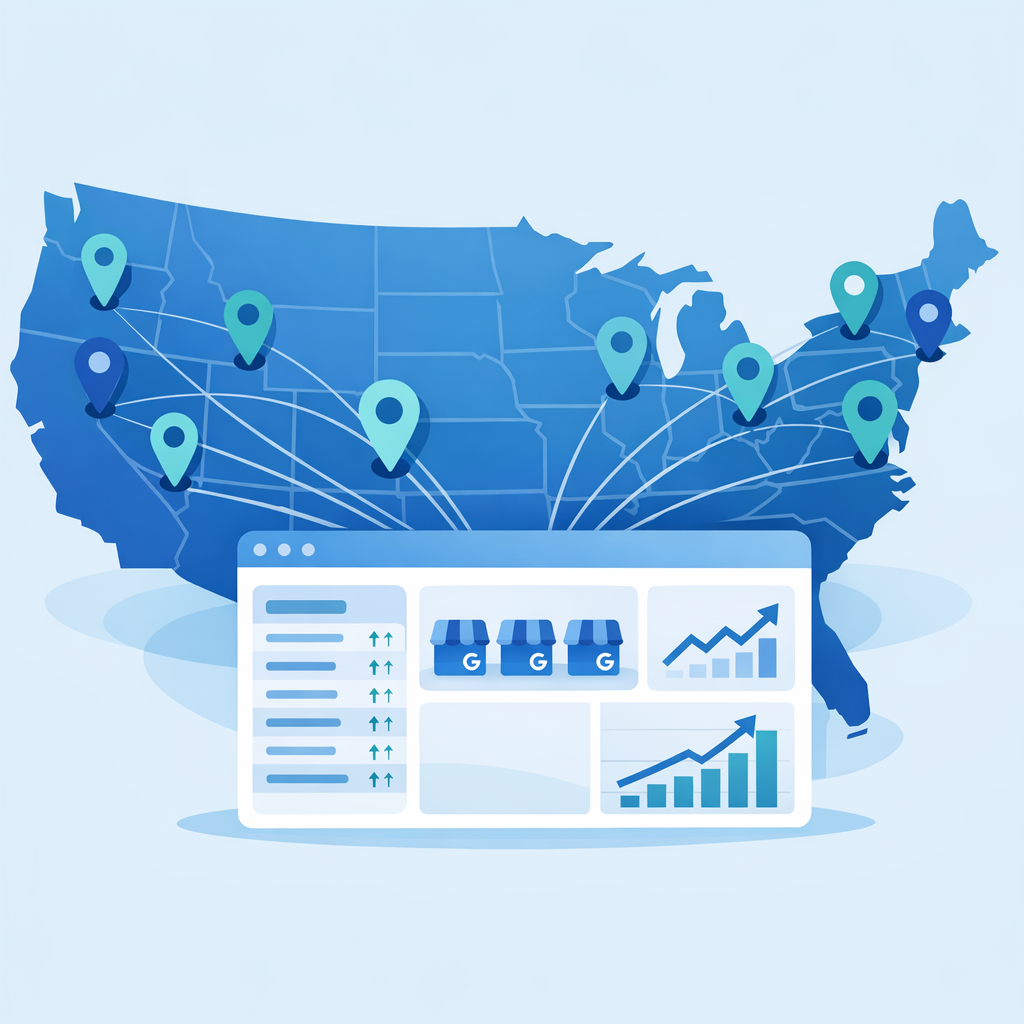
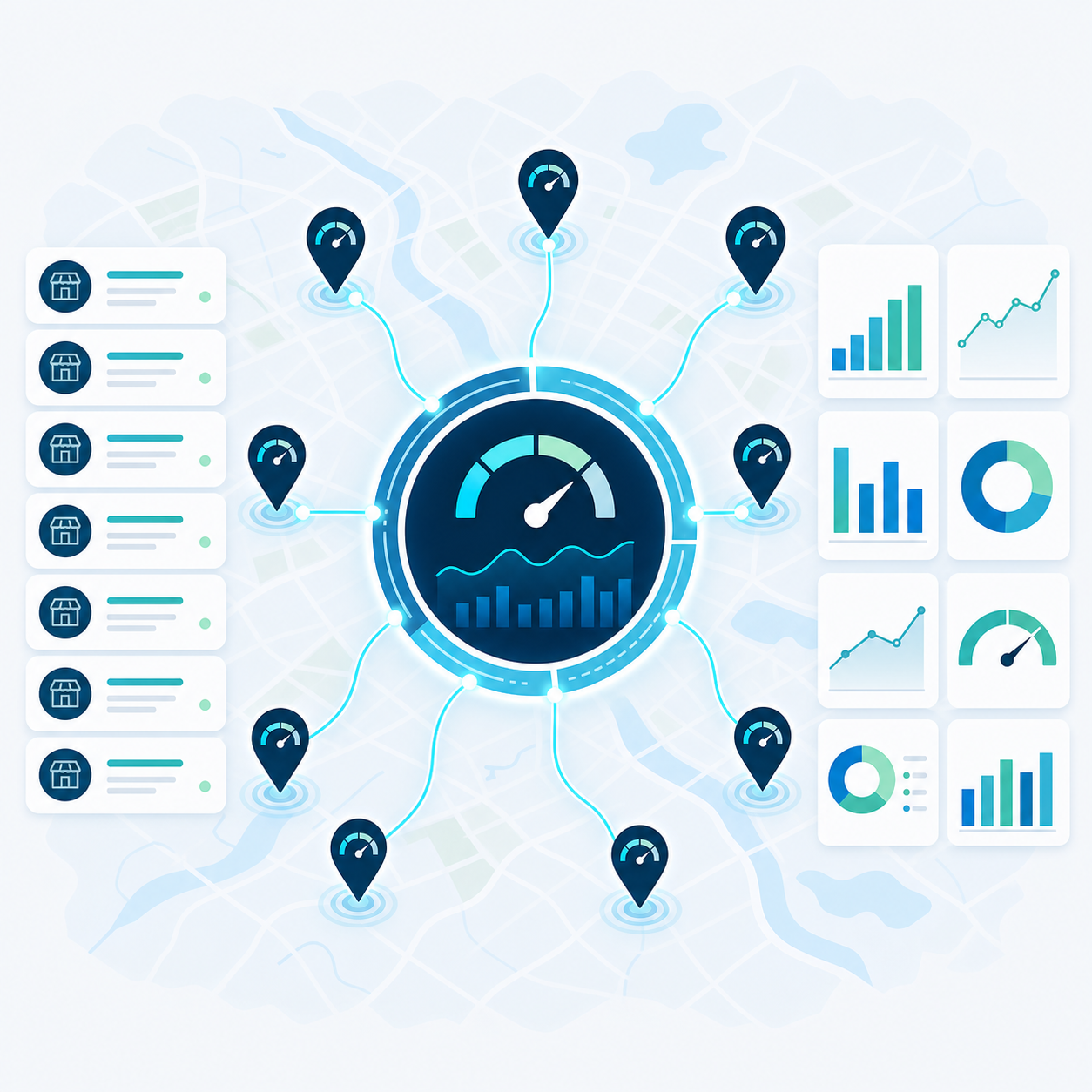
A centralized dashboard that shows network-wide performance and individual location performance in the same view gives you what you need to make real decisions. Which markets are generating the most leads? Which locations have the lowest cost per call? Which campaigns are running in one market that could be replicated in others? PowerStack surfaces all of this in one place, with data from every paid channel, every location, and every PowerPartner-managed campaign consolidated under one login.
5. Run A/B tests at the location level, not just the network level
What converts in one market often does not convert the same way in another. A call to action that works well for homeowners in one region may underperform with commercial buyers in another. Testing creative, messaging, and offers at the location level, rather than applying one winning variant across the entire network, produces more accurate data and more locally relevant campaigns over time.
The key is keeping tests controlled so the results are actionable. Change one variable at a time, run tests long enough to reach statistical significance, and document what you learn so it can inform campaign decisions in similar markets. Over time, this builds a playbook of proven approaches for different market types, buyer segments, and seasonal windows that makes every new campaign faster to optimize.
Managing Multi-Location Digital Advertising with PowerChord
PowerChord's platform is built specifically for the operational reality of managing paid media across multiple locations simultaneously. PowerPartner's team of campaign managers handles day-to-day execution across every location in your network, building campaigns, optimizing performance, and reallocating budget based on the performance data that flows back into PowerStack in real time.
For equipment dealers, powersports dealer networks, roofing companies, and HVAC contractors managing campaigns across multiple markets, this means every location gets a locally optimized campaign without requiring each individual dealer or franchisee to manage their own advertising program. The brand gets network-wide visibility into what is performing. Each location gets the leads. And co-op advertising funds from OEM brands can be activated and deployed across the network before the selling season opens, with compliance documentation managed inside the same platform.
Whether you are running paid search, paid social, display, retargeting, or connected TV campaigns, PowerStack consolidates performance data from every channel and every location into one dashboard. PowerPartner handles the execution. You see the results.
Ready to run paid media across every location without the operational overhead of managing it yourself? Schedule a demo and we will walk you through exactly what that looks like for your network.
Frequently Asked Questions: Digital Advertising for Multi-Location Businesses
How do you run digital ads across multiple locations without losing brand consistency?
The answer is building your campaigns on a centralized platform where the brand controls the template and the messaging parameters while each location executes within those boundaries. A national brand that allows every dealer or franchisee to run their own campaigns independently ends up with wildly inconsistent messaging, variable creative quality, and no visibility into aggregate performance. A platform that gives brand teams control at the template level while giving location teams the ability to customize within defined parameters solves both the consistency problem and the local relevance problem at the same time. Every ad looks like it came from the same brand. Every campaign speaks to the specific market it is running in.
What is the best platform for managing multi-location digital advertising?
The best platform for multi-location digital advertising is one that consolidates campaign management, performance reporting, and lead tracking for every location into a single system rather than requiring separate logins, separate reports, and separate tools for each market. PowerStack gives brands and operators a single dashboard showing paid media performance across every location simultaneously, with the ability to drill down to individual market data without pulling separate reports. PowerPartner's campaign managers execute inside that platform, so the work the team does and the results it produces are visible in the same place.
How do you track which ads are working across multiple locations?
Call tracking is the foundation. It assigns a unique phone number to each campaign and location so every inbound call is attributed to the specific ad that generated it. Pair call tracking with a CRM that logs every lead from first contact through to closed job and you have full visibility into which campaigns are producing real revenue rather than just clicks and impressions. When call tracking data, campaign performance data, and lead outcome data all flow into the same centralized dashboard, the picture becomes clear enough to make meaningful budget decisions. Without that integration, you are reallocating spend based on partial information.
How much does multi-location digital advertising cost?
Cost depends on the number of locations, the channels you are running, and the competitive dynamics of each market. A useful benchmark for most businesses is allocating five to ten percent of revenue to marketing, with digital advertising representing a significant share of that. For brands running co-op-funded campaigns through OEM programs, a portion of that spend may be reimbursable, which effectively lowers the net cost of the advertising. The more important number than total spend is cost per qualified lead by location, which is only visible when call tracking and CRM are properly connected to your campaign data.
How do dealer networks manage digital advertising across their locations?
The dealer networks that manage advertising most effectively do it through a centralized platform that the brand controls rather than leaving each dealer to manage their own campaigns independently. Every authorized dealer gets a locally optimized campaign destination, a co-branded local page that captures buyer intent in their specific market, and lead tracking that routes every inquiry back to the brand in real time. The brand can see performance across every dealer location simultaneously and shift budget toward the markets generating the most qualified leads. PowerChord's microsites and lead management module is built specifically for this model, giving OEM brands the network-level visibility and control that disconnected dealer-level advertising cannot provide.
How do co-op advertising programs work with digital campaigns?
Co-op advertising programs make OEM-funded budget available to authorized dealers to run local campaigns promoting the brand's products in their market. In a digital advertising context, that means paid search campaigns, social media ads, and display campaigns running at the dealer level, funded in part by the manufacturer, with the dealer submitting documentation for reimbursement. The practical challenge is that most co-op programs have compliance requirements around creative standards, approved channels, and documentation processes that dealers do not have the internal resources to manage consistently. PowerChord handles co-op campaign activation, creative compliance, and reimbursement documentation across every dealer in the network so funds get deployed rather than expiring unused at the end of the program year.
What is the difference between national and local digital advertising for multi-location brands?
National advertising builds brand awareness at scale. Local advertising generates leads and conversions at the location level. For most multi-location brands, the national campaign does its job well but the moment a buyer goes looking for a specific location near them, they fall into whatever local presence that individual location has built on its own. The gap between the awareness a national campaign generates and the leads a local presence captures is where most multi-location brands lose the most revenue. Local digital advertising closes that gap by targeting buyers in each specific market, driving them to a locally relevant destination, and capturing the inquiry in a way that can be tracked back to the campaign that generated it.
How do you manage different budgets across multiple locations?
Budget management across locations is one of the most operationally complex parts of multi-location advertising. Markets have different competitive dynamics, different seasonal patterns, and different cost-per-click benchmarks, which means a uniform budget allocation across every location will consistently overfund underperforming markets and underfund your best ones. The solution is a centralized platform that shows cost per lead by location in real time, so budget can be reallocated toward the markets generating the most qualified inquiries while campaigns in slower markets are adjusted or paused. PowerPartner's campaign managers do this continuously across every location in the network, using PowerStack performance data to make allocation decisions without requiring manual report pulls or weekly performance calls to surface the information.